Summer camping got into full swing this week. We are doing short one and two day trips to fine tune the systems in our Eurovan camper. We will eventually do longer trips but for now we are working out kinks.
On a recent Crooked River trip we were treated to an afternoon summer storm. Watched it roll over the canyon walls and in about 30 minutes it was gone.
It took the muggy warm day and left us with a very pleasant evening. Fishing wasn’t all that good but we did get caught up on our reading.
Oregon’s roads present us with so much more than a means to an end. Each turn presents new vistas, viewpoints, historical markers, even whole roads designated scenic byways. This day it was a cattle drive.
A Fort Rock area rancher was moving his herd to new pasture using Highway 31 west of Summer Lake. The wait was much more entertaining than a construction zone. Complete with cowboys on horses and cattle dogs.
We pulled to the side of the road, rolled down the windows and uncapped our lenses. Except for the blacktop you might have been sitting on the sage prairie two hundred years ago. Then 20 minutes later we are back on our way to Summer Lake and another roadside treasure.
Sometimes when you start out for the day there is a destination in mind. Other times you don’t know where you’re going, and once in a while it changes mid journey.
Last week we had just that kind of day. It started with a trip to get sunrise images at Fort Rock, maybe grab photos of raptors, and hike up around the rim. It was a frosty morning, a bit too cold for a long walk, although we did pick up some great shots.
Generally speaking, we don’t like to return on the same route we came. With more of the morning to take advantage of, we pulled the maps and plotted a loop home that looked interesting. It took us over ground we’ve not yet explored … via forest service roads.
Bouncing around on small forest service roads is an adventure. Often not much more than a couple of ruts in the high desert duff, winding through the sage and pinethat nearly always presents you with spectacular views.
Central Oregon forests and high desert lands are typically crisscrossed by a web of dirt roads. Probably because it’s pretty easy to cut a road in this country.
Even when there’s not a road mapped, a simple two track exists on the ground. This means you really need to keep a close eye to the USFS road markers, those flat metal posts at most junctions with numbers on them.
Standard kit in our car are BLM and USFS district maps to aid the GPS.The forest service roads are numbered at junctions, unless some stoop has used it for target practice.Main routes (arterials) get assigned two digit designations. Secondary or collector roads are a four digit number, and local, short access roads, have three digits.
Arterials can be paved, are often graded and usually travelable. But when you start down the four digit routes it gets a bit more dicey. Few of these dirt tracks are maintained with any regularity. Here you need to navigate with some caution as you can run into rough patches, downed trees and worse.
We unexpectedly came upon a controlled burn in the Cabin Lake area. Drive through it? Nope. We took a sharp right on a 2-track lane, turning east, away from the choking smoke.
To the east of Fort Rock is a lava flow formation called the Devils Garden (scheduled for a separate day’s exploration). We start with USFS 18, skirting the western edge of that rocky structure, then turn on to 2431 and bump along the seam where forest meets high desert.
Our travels took a few different types of ‘4 digit’ roads that slalomed through second growth Ponderosa pine, offering frequent vistas out onto the Christmas Valley hay fields.
Eventually we wound up on the southern rim of Hole-in-the-Ground, a unique, if unimaginatively named geological feature.
We ended the day’s expedition on a state route headed East to La Pine and used the highway speeds to shake a bit of the dust from the Subaru.
Being retired we find time to embrace certain concepts or more like Rules to Live By. They help us focus on what’s really important and among them are:
Fun will be had by all
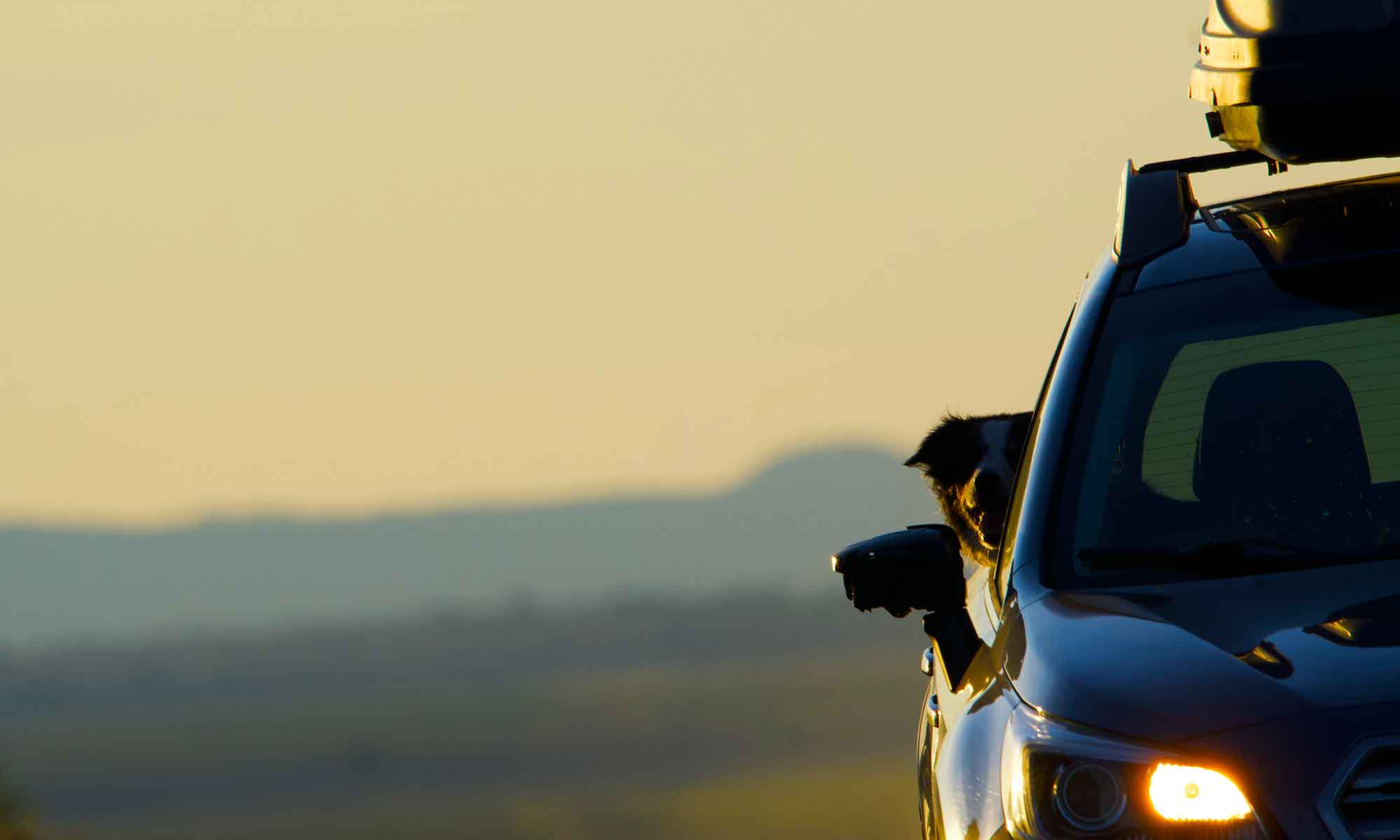
Live life like my dog
Housework never supersedes fun
However, today we plan to use the Never Go Back The Same Way We Came rule. After a wonderful morning and lunch at Spring Basin Wilderness, we continue our exploration of the area.
We head along a scenic drive to explore the prehistoric past of Oregon and stop at the Clarno Unit of the John Day Fossil Beds. It is located 18 miles west of the town of Fossil, Oregon.
The Palisades are the most prominent landform and are ancient mudflows.
The trailhead is located along Highway 218. The Trail of Fossils (¼ mile loop) is the only trail in the park where visitors can easily see fossils in the rocks. Large boulders strewn below the Palisades contain dozens of visible plant fossils. We glimpse fossilized plants along the cliff walls as well … when suddenly we hear a strange “gobble” sound. I kid you not! We grab the binoculars and sure enough it’s a flock of wild turkeys. What a perfect end to a perfect day.
Sure, we get home late. But luckily we’ve put into practice our Always have dinner ready and waiting after a long day on the road rule. On the menu, Minestrone Soup with toasted baguette. Yeah … these are rules we can live by.
Located just north of Redmond, the Peter Skene Ogden Park is the perfect stop if you’re heading south. A rest area that features three bridges spanning the Crooked River gorge. The railroad bridge that is about 100 years old, a highway bridge no longer in use, and the new bridge.
Oregon Trunk Railroad bridge is a steel arch built in 1910. Workers climbed rope ladders and waded through the river to get to the other side. Later, 300 feet above the gorge, they would “walk the plank,” crossing over on narrow boards that bounced with each step.
The Crooked River High Bridge allows pedestrians to walk the 464 feet over the Crooked River gorge to some dizzying views of sheer basalt walls leading down the 300 foot canyon face.
Also, if you are so inclined, there is a platform set up for bungee jumping.
Speaking of jumping … onealarming note…there were many signs posted on the path to the gorge’s edge. They all offered a very explicit warning about the fate of many dogs (gulp).
Needless to say. I left both Tip and Jack in the car.

 Summer camping got into full swing this week. We are doing short one and two day trips to fine tune the systems in our Eurovan camper. We will eventually do longer trips but for now we are working out kinks.


 Sometimes when you start out for the day there is a destination in mind. Other times you don’t know where you’re going, and once in a while it changes mid journey.
 Last week we had just that kind of day. It started with a trip to get sunrise images at Fort Rock, maybe grab photos of raptors, and hike up around the rim. It was a frosty morning, a bit too cold for a long walk, although we did pick up some great shots.


 Even when there’s not a road mapped, a simple two track exists on the ground. This means you really need to keep a close eye to the USFS road markers, those flat metal posts at most junctions with numbers on them.


 To the east of Fort Rock is a lava flow formation called the Devils Garden (scheduled for a separate day’s exploration). We start with USFS 18, skirting the western edge of that rocky structure, then turn on to 2431 and bump along the seam where forest meets high desert.
 Eventually we wound up on the southern rim of Hole-in-the-Ground, a unique, if unimaginatively named geological feature.

 We head along a scenic drive to explore the prehistoric past of Oregon and stop at the Clarno Unit of the John Day Fossil Beds. It is located 18 miles west of the town of Fossil, Oregon.
 The Palisades are the most prominent landform and are ancient mudflows.
 Oregon Trunk Railroad bridge is a steel arch built in 1910. Workers climbed rope ladders and waded through the river to get to the other side. Later, 300 feet above the gorge, they would “walk the plank,” crossing over on narrow boards that bounced with each step.
 The Crooked River High Bridge allows pedestrians to walk the 464 feet over the Crooked River gorge to some dizzying views of sheer basalt walls leading down the 300 foot canyon face.
 Speaking of jumping … one alarming note…there were many signs posted on the path to the gorge’s edge. They all offered a very explicit warning about the fate of many dogs (gulp).